At Radiant Wellness & Aesthetics Med Spa in Forked River, NJ, we are committed to providing our clients with the latest and most effective skin care treatments. Dermaplaning is one of these advanced procedures, offering an exceptional way to achieve smoother, brighter, and more youthful skin. Let’s delve into what dermaplaning is, how it works, and who can benefit from this popular exfoliation technique.
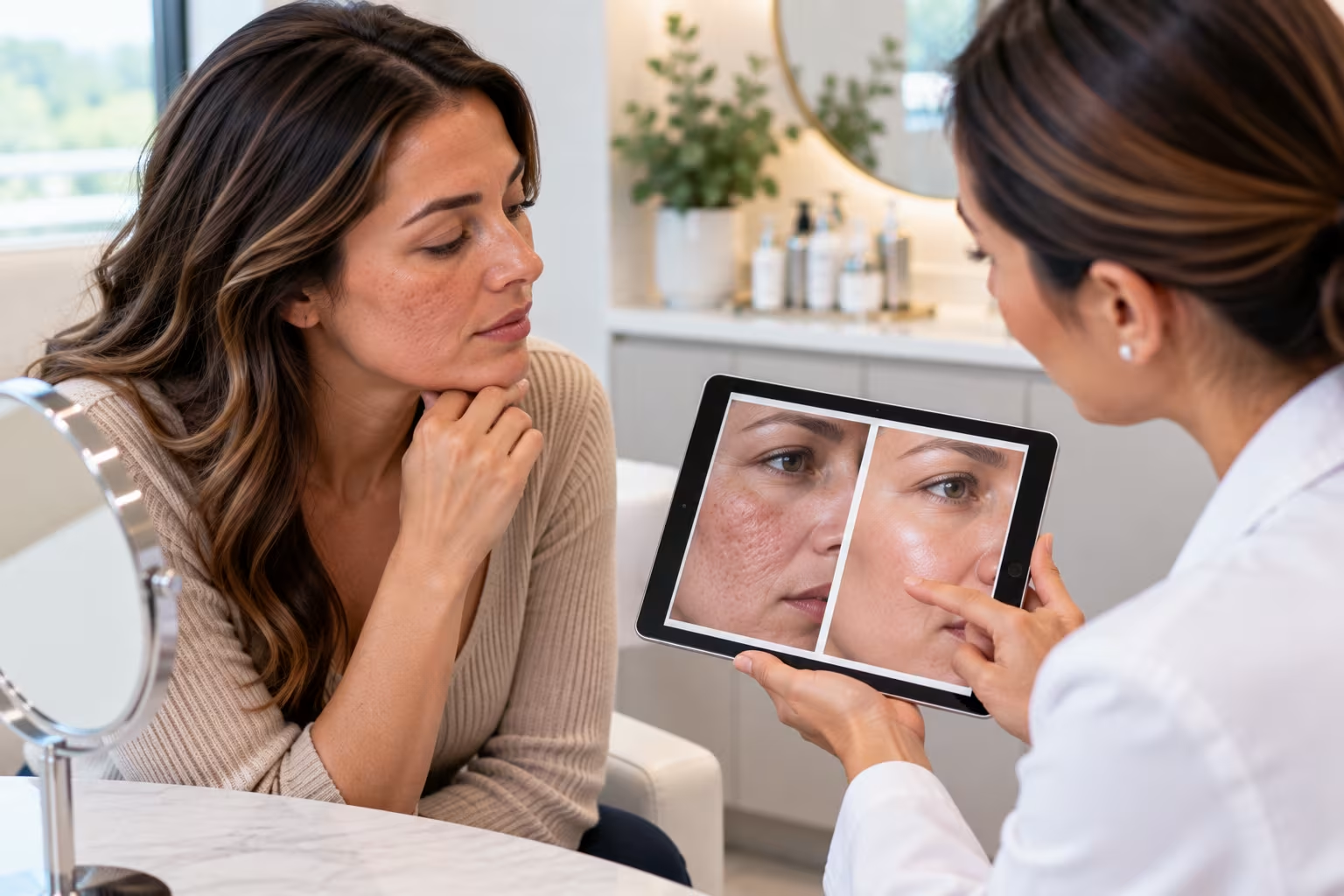
Acne is frustrating enough while it is happening, and it can feel like a second insult when the breakouts finally clear but leave marks behind. Acne scarring is one of the most common reasons people come to us long after their skin has stopped breaking out, often after years of trying to camouflage the texture with makeup or hoping it would smooth out on its own. It usually does not, at least not without help.
This guide covers the different types of acne scarring, why some marks respond better to treatment than others, and which options tend to make the most visible difference. Updated this September 2026.
What Causes Acne Scars to Form?
Acne scars form when inflammation from a breakout damages the collagen structure beneath the skin, and the body's healing response either produces too little or too much collagen as it repairs the area. That imbalance is what creates the indentation or texture change left behind.
Deeper, more inflamed breakouts like cysts and nodules are far more likely to leave lasting scars than surface-level whiteheads or blackheads, which is why picking or squeezing inflamed acne tends to make scarring worse rather than better. The damage happens at the moment of inflammation, not necessarily at the moment of healing.
Are All Acne Scars the Same?
No. Acne scars generally fall into a few categories, including atrophied or pitted scars, raised or hypertrophic scars, and post-inflammatory discoloration, and each type responds differently to treatment.
Pitted scars, often described as boxcar, rolling, or ice pick scars depending on their shape, are the most common type and result from a loss of collagen during healing. Raised scars occur when the body produces excess collagen in response to inflammation, creating a firm, elevated mark instead of an indentation. Discoloration, while technically not a textural scar, is often grouped into the same conversation because it frequently lingers long after a breakout has healed.
Can Acne Scars Fade or Improve Without Treatment?
Post-inflammatory discoloration can fade over several months to a year on its own, especially with consistent sun protection, but textural scarring caused by collagen loss typically does not resolve without some form of professional treatment.
This distinction matters because it shapes expectations. If what you are seeing is a flat, discolored mark, patience and diligent SPF use may be enough. If the scar has any depth or texture to it, at-home care alone is unlikely to smooth it out the way professional treatment can.
What Treatments Are Most Effective for Acne Scarring?
The most effective treatments work by stimulating new collagen production or resurfacing the skin's surface layer, and the right choice often depends on the type, depth, and number of scars involved. At Radiant Wellness Aesthetics Med Spa, we evaluate scar type before recommending a plan rather than defaulting to a single approach for everyone.
How Does Microneedling Improve Acne Scars?
Microneedling creates controlled micro-injuries in the skin using fine needles, which triggers the body's natural collagen and elastin production to gradually fill in pitted scarring over a series of sessions. It is one of the more versatile options because it works on most skin tones and scar types with minimal downtime. More information is available on our microneedling service page.
Can a Chemical Peel Smooth Out Acne Scarring?
Chemical peels exfoliate the outer layers of skin, which can help soften the appearance of shallow scarring and improve overall texture and tone, though they tend to be more effective on discoloration than on deeper pitted scars. They are frequently used alongside other treatments as part of a broader plan. Details are available on our chemical peel page.
Is Laser Treatment Effective for Deeper Acne Scars?
Fotona 4D uses laser energy to stimulate deeper collagen remodeling, making it a strong option for more textured or long-standing acne scarring that has not responded to lighter treatments. Because it addresses both texture and tone, many clients see improvement in surrounding discoloration as well. You can read more in our article on Fotona 4D treatment in Forked River.
DiamondGlow can also play a supporting role for clients with milder texture concerns or as a way to maintain results between more intensive treatments. Our DiamondGlow page has more detail on how that treatment works.
How Many Sessions Does It Take to See Results?
Most acne scar treatments require multiple sessions spaced several weeks apart, since collagen remodeling happens gradually and the skin needs time to rebuild between treatments. Visible improvement is common, though complete elimination of deeper scarring is rarely realistic with any current treatment.
Setting expectations early makes a real difference in how satisfied clients feel with their results. Significant improvement in texture and tone is a reasonable goal. A completely blank canvas is not, and any provider promising that outcome should be approached with caution.
Who Is a Good Candidate for Acne Scar Treatment?
Most people with active breakouts under control and visible scarring from past acne are good candidates, though the specific treatment recommended depends on scar type, skin tone, and skin sensitivity. It is generally best to wait until active acne is stable before starting scar-focused treatment.
Treating scars while acne is still active can lead to new marks forming during the healing process, which is why a provider will typically evaluate whether your breakouts are under control before building a treatment plan.
Frequently Asked Questions
What is the most effective treatment for deep acne scars? Laser treatments like Fotona 4D and a series of microneedling sessions tend to be most effective for deeper, pitted scarring since both stimulate collagen remodeling at a deeper level than surface treatments alone.
Can acne scars be completely removed? Most treatments significantly improve the appearance of acne scars, but complete removal is rarely achievable, especially for deeper textural scarring.
How long after acne clears should I wait to treat scarring? It is generally best to wait until active breakouts are stable and under control before starting scar-focused treatment to avoid new marks forming during healing.
Is microneedling or chemical peel better for acne scars? Microneedling tends to be more effective for textured, pitted scarring, while chemical peels work well for discoloration and milder surface texture, and many treatment plans combine both.
Does insurance cover acne scar treatment? No, acne scar treatments are generally considered cosmetic and are paid out of pocket, though many practices offer package pricing for multi-session plans.
Your Skin's Comeback Story Starts Here
Acne scars do not have to be the thing you keep covering up and hoping nobody notices. With the right combination of treatments, real improvement in texture and tone is genuinely achievable. The team at Radiant Wellness Aesthetics Med Spa helps Forked River clients build treatment plans around their specific scarring, not a generic protocol. Browse our full services or reach out through our contact page to schedule your consultation.